 Connect
Throughline developed the LOGCELL program for the Naval Supply Systems Command (NAVSUP) and Naval Air Systems Command (NAVAIR) to solve mission-critical supply chain problems. Today, NAVSUP's goal of 100% aircraft uptime is achievable as stakeholders from the Navy and private sector work together.

Ever wonder how more than 190,000 sailors, Marines, civilians, and contractors work together to support Naval Aviation? The Naval Aviation Enterprise (NAE) is at the heart of the extensive collaboration required to have aircraft ready to accomplish any mission.
We were thrilled when asked by the Naval Supply Systems Command (NAVSUP) and Naval Air Systems Command (NAVAIR) to bring together stakeholders in a complex supply chain that made it difficult for leaders to achieve the kind of holistic view that would enable better, faster decision-making to ensure more planes were flying more often.
We approached the challenge by embarking on a strategy of define, develop, prototype, validate, deliver, and scale. Working with the joint NAVSUP and NAVAIR team, we identified stakeholders and conducted hundreds of interviews and in-depth field work to gather data. This enabled us to document issues, define the current state, and identify information gaps.
The concept of Aviation LOGCELL was designed to overcome readiness challenges facing NAE. As NAVSUP and Throughline co-created a path forward, the idea of LOGCELL Thinking came to the fore, guiding efforts and informing the creation of the playbook and branding and communications strategies.
We cultivated a strategy to articulate the value of LOGCELL Thinking as a key strategic enabler that communicates to users, stakeholders, and customers about why a cohesive collaboration methodology is the key to readiness.


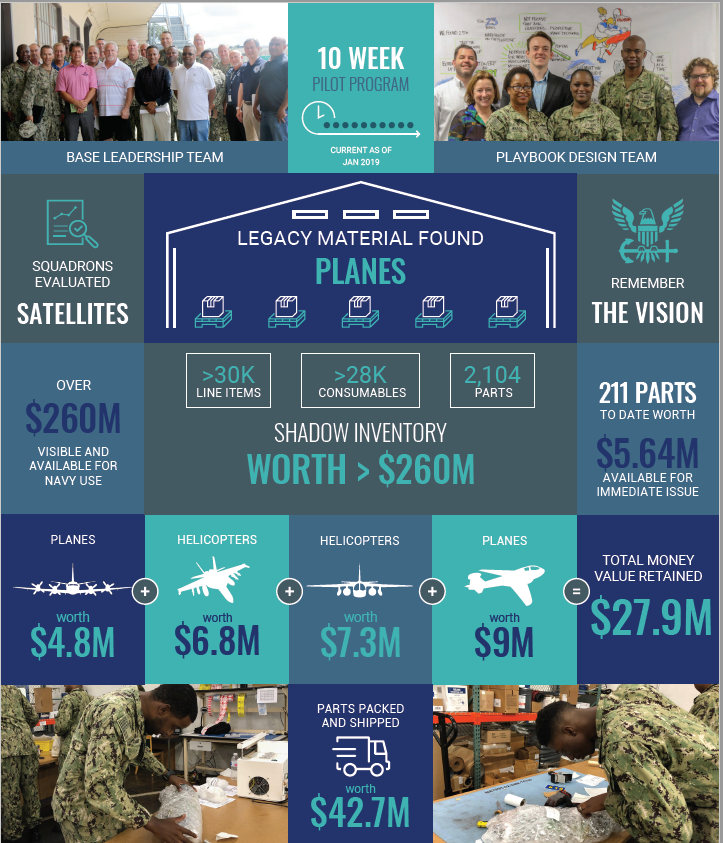
Bringing together data and stakeholders from both the NAE and original equipment manufacturers (OEMs) in a deliberate way allowed NAVSUP to drive toward a goal of 100% uptime for aircraft. As a direct result of this work, NAVSUP has experienced backorder reduction, cost avoidance, reduced customer wait time, and increased repair coverage.



.png)
